Drunken Noodles Near Me: Why Locals Love This Thai Classic
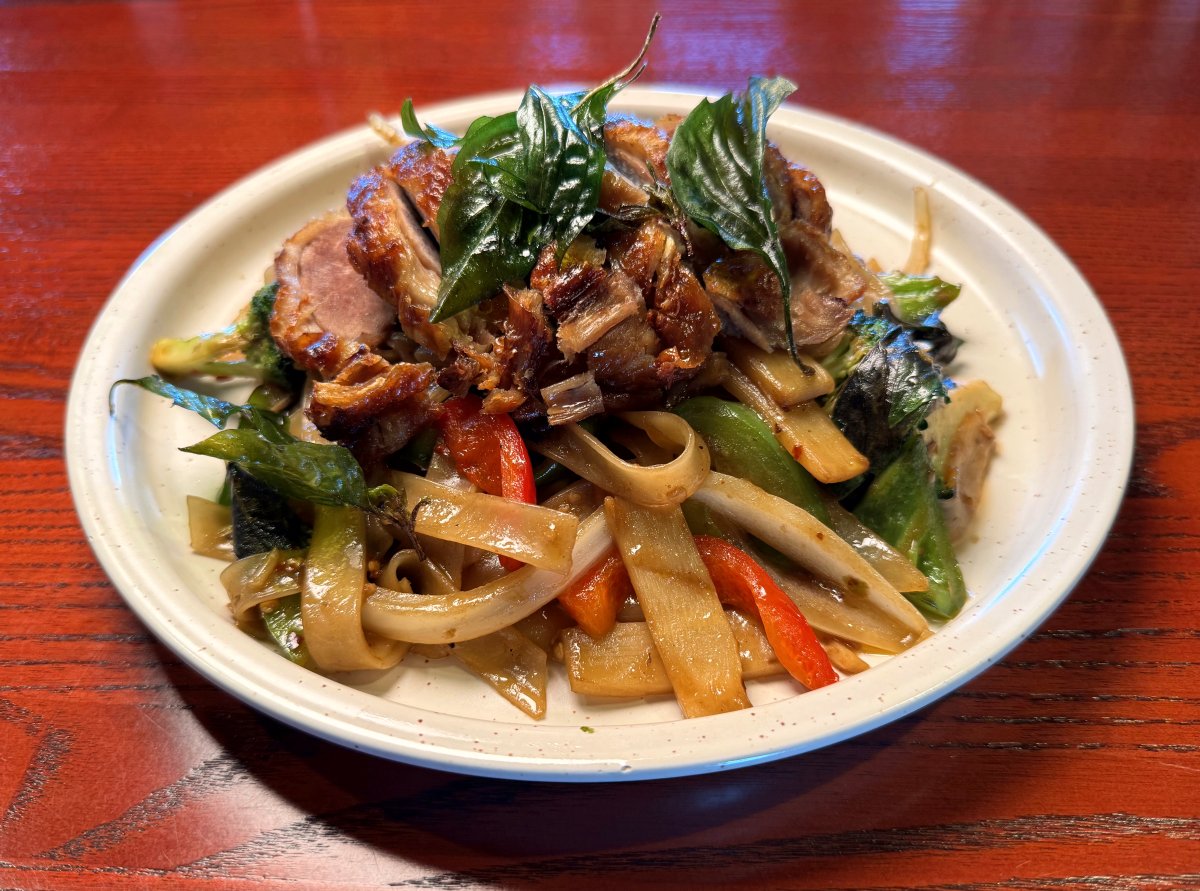
Search interest in Drunken Noodles Near Me tends to spike at the same times, late lunch, rainy evenings, after-work hunger, and those nights when plain takeout will not do. That pattern makes sense. Few Thai dishes hit the sweet spot between comfort food and bold cooking as reliably as Drunken Noodle. It is spicy without being one-note, savory without turning heavy, and familiar enough for first-timers while still giving regulars plenty to debate.
Locals love it for a simple reason. When it is done well, it tastes like a complete meal in one plate. You get soft rice noodles with a little chew, seared meat or tofu, garlic, basil, heat from chilies, and a glossy sauce that clings rather than pools. It arrives smelling alive. Even before the first bite, you know whether the cook understands the dish.
That matters because Drunken Noodles, often served under the Thai name pad kee mao, are not just "spicy noodles." The best versions have a kind of controlled chaos. A little char from a hot wok. Sweetness balanced against salt. Heat that rises and lingers. Basil that freshens the finish. The plate should feel fast, loud, and deeply intentional.
What people are really looking for when they search nearby
When someone types Drunken Noodles Near Me, they are usually looking for more than distance. They are trying to solve a craving with a dish that can go wrong in predictable ways. Too much sauce and the noodles turn slack. Too little heat and the whole plate falls flat. Overcooked vegetables lose their snap, and a timid hand with basil leaves the dish tasting generic.
Local regulars learn quickly which restaurants get the details right. They know the spots where the kitchen fires the wok hot enough to create that slight smokiness many diners describe before they can name it. They know where the noodles stay separate rather than collapsing into a sticky mass in the takeout box. They know which place says "Thai spicy" and means it, and which one quietly tones everything down for a broader crowd.
There is also a practical side to the search. Drunken Noodles travel better than some noodle soups and better than delicate fried dishes that wilt on the ride home. Even after twenty minutes in a delivery bag, a strong version still holds together. That makes it a dependable order for busy households, office lunches, and weeknights when cooking is out of the question.
Why this dish keeps a loyal local following
Some dishes become local favorites because they are cheap. Others because they are photogenic. Drunken Noodles earn loyalty because they satisfy on several levels at once.
First, they feel substantial. Wide rice noodles have a comforting texture that thinner noodles cannot quite match. They absorb sauce without turning into mush, assuming the kitchen knows how to handle them. A good serving also tends to be generous. In many Thai restaurants, one order can feed a very hungry person or comfortably stretch into leftovers.
Second, the dish is adaptable. Chicken works. Beef works. Shrimp can be excellent if it is not overcooked. Tofu, when pressed and seared properly, is more than a placeholder. Some local spots even do a house version with crispy pork, duck, or mixed seafood. That flexibility helps the dish reach a wide audience without losing its identity.
Third, Drunken Noodle rewards bold cooking. Diners notice that. In a neighborhood where several Thai restaurants may share similar menus, this dish often exposes the difference between a capable kitchen and a memorable one. You can fake a mild curry with enough coconut milk. You cannot hide weak wok technique in Drunken Noodles.
The flavor profile that keeps people coming back
A useful way to think about Drunken Noodles is balance under pressure. The cook has only a short window to build flavor before the noodles overcook. There is not much room for hesitation.
The classic profile leans on garlic, fresh chili, soy-based seasoning, a touch of sweetness, and holy basil or Thai basil, depending on the kitchen and ingredient availability. In many American Thai restaurants, broad rice noodles are standard, along with onion, bell pepper, and sometimes baby corn, broccoli, or green beans. Purists might argue over vegetable choices, but most locals care less about strict orthodoxy than whether the final plate tastes alive.
That "alive" quality comes from contrast. The noodles should be soft but not limp. The vegetables should retain bite. The sauce should be assertive but not soupy. Chili heat should wake up the palate, not numb it into submission unless that is exactly what you requested. Basil should cut through the richness and leave a fragrant finish. When all of those pieces land together, the dish feels bigger than the sum of its ingredients.
It is also one of those rare takeout dishes that can satisfy very different eaters at the same table. One person orders medium spice with chicken. Another orders extra hot with tofu. A third goes mild but still gets plenty of savory depth. That kind of flexibility helps explain why neighborhood Thai spots often treat Drunken Noodles as a core menu item rather than a side player.
The name is part of the appeal, but the plate does the real work
People often ask whether Drunken Noodles contain alcohol. Usually, no. The name has inspired all sorts of stories over the years. Some say it is food made to pair with drinking. Others say it is the kind of fiery late-night meal a hungry person would cook after a night out. There is no single explanation that every restaurant agrees on, and that ambiguity has become part of the dish's charm.
Still, locals do not keep ordering it because of the name. They order it because it delivers a certain kind of satisfaction that is hard to replicate. Pad Thai is sweeter and more familiar to many casual diners. Pad see ew is gentler, often softer around the edges. Drunken Noodles occupy a more assertive middle ground. They punch harder than pad see ew and feel less dessert-adjacent than a syrupy Pad Thai from a tourist-focused kitchen.
That bolder personality makes the dish especially popular among regulars who want flavor first. It is often the point in a diner's Thai food journey where they move past the safest options and start noticing technique, spice control, and ingredient freshness.
How to tell whether a restaurant makes a strong version
If you are trying a new spot after searching Drunken Noodles Near Me, a few signs can help you sort the merely decent from the truly local-favorite level. You do not need a formal tasting sheet. You just need attention to detail.
- The noodles should be glossy and separate, not clumped into one soft block.
- The aroma should lead with basil, garlic, and wok-fired savoriness, not only sweet sauce.
- The vegetables should still have structure and color.
- The spice level should taste intentional, not like chili flakes dumped on top at the end.
- The container should not be swimming in liquid after a short drive home.
Those cues show whether the kitchen respects the dish. They also reveal something about the restaurant's volume and workflow. A place that moves a lot of noodle dishes tends to understand timing better. In busy Thai restaurants, you can often hear the difference from the dining room, quick bursts from the wok, sharp motion, fast plating. Drunken Noodles benefit from that kind of energy.
Why wok technique matters more than most diners realize
A lot of diners focus on ingredients, and fair enough, good basil and fresh noodles matter. But technique is what gives Drunken Noodles their identity. A restaurant can have solid ingredients and still produce a flat plate if the wok heat is weak or the pan is crowded.
High heat changes the dish in three ways. It lightly chars the noodles, concentrates the sauce, and lets the vegetables cook fast without collapsing. That is why a fresh plate often tastes deeper than the short ingredient list suggests. The complexity is coming from speed and caramelization, not just from extra seasonings.
Home cooks run into this problem all the time. A standard home burner usually cannot match a commercial wok station, so the noodles steam instead of sear. Restaurants that do Drunken Noodles well are not just following a recipe. They are managing moisture, timing, and heat in a narrow window. Locals may not describe it in those terms, but they know it when they taste it.
This is also why the dish can vary so much from one Thai restaurant to another, even within the same city. One place produces noodles with smoky edges and bright basil. Another serves a damp, sweet stir-fry that tastes like an afterthought. Same menu name, completely different result.
Spice level, and why "medium" means almost nothing
Anyone who orders Thai food regularly has learned the hard way that spice scales are deeply inconsistent. One restaurant's medium is another restaurant's regret. Drunken Noodles make that especially obvious because chili is central to the dish's personality.
The best approach is not to treat spice as a contest. Treat it as calibration. If it is your first time at a restaurant, start one level below your usual threshold unless you already know the kitchen's style. Strong heat should support the noodle, basil, and savory notes, not drown them. Extra spice can be thrilling, but it can also flatten complexity if the only memory you carry away is pain.
Regulars often develop a script for ordering. They ask for medium-plus, or "Thai hot but balanced," or "spicy enough to taste the chili, not so hot I lose the basil." Those little phrases come from experience. Good restaurants listen. Great ones remember.
One practical note: spice can intensify slightly as the noodles sit, especially in a closed takeout container where steam and sauce continue to mingle. If you are ordering for delivery and already ride the edge of your tolerance, it is worth keeping that in mind.
Why it works so well for takeout and delivery
Not every beloved restaurant dish survives the trip home. Fried foods soften. Delicate herbs fade. Noodle soups often need immediate attention. Drunken Noodles, by contrast, are built for the realities of modern dining.
The sauce is substantial enough to keep the noodles moist, but ideally not so loose that everything turns soggy. The wide noodles reheat better than many thinner styles. The vegetables, if not overcooked to begin with, hold up reasonably well. Even the basil, while brightest fresh from the wok, often keeps enough of its fragrance to carry the dish after a short delivery window.
That durability matters in real life. Families order Thai on nights when everyone is eating on a slightly different schedule. Office workers order lunch between meetings. College students order late and eat later. Drunken Noodles are forgiving. A fifteen-minute delay is not ideal, but it is survivable, and that makes the dish a reliable favorite in neighborhoods where takeout is part of the weekly routine.
Pairings and order strategy if you are feeding a group
For solo diners, Drunken Noodles can easily be the whole meal. In a group order, they play nicely with dishes that bring contrast. You do not need to overthink it, but a little balance helps. If the noodles are your spicy, savory anchor, you might want one cooling item, one crisp item, and one curry or protein dish to round out the table.
A practical group order might include these:
- Drunken Noodles as the main starch-forward dish
- A papaya salad or fresh rolls for brightness
- One curry for sauce and richness
- A stir-fried vegetable dish for contrast
- Sticky rice or jasmine rice only if the group is especially hungry
That kind of mix gives everyone options without ending up with five versions of the same flavor. It also helps if not everyone at the table enjoys high spice. One of the reasons locals return to Thai restaurants again and again is that the menus are naturally built for sharing, and Drunken Noodles hold their own in that setting.
The local restaurant factor
There is another reason this dish draws local loyalty. It often reflects the personality of the restaurant better than safer crowd-pleasers do. A family-run place may use more heat, more basil, and less sugar. A restaurant near office towers may soften the edges for lunchtime appeal. A late-night spot may lean heavier, saltier, and hotter because that is what the crowd wants at 9:30 p.m.
Spend enough time eating around one city and patterns emerge. Neighborhood Thai places often have a house Drunken Noodle style, whether they advertise it or not. Some favor thick, almost silky noodles with dark savory depth. Others push freshness, lots of chili, lots of basil, more visible vegetables. Neither approach is automatically better. The question is whether the kitchen executes its own version with confidence.
That is why locals develop strong opinions. They are not arguing over a generic dish. They are defending a place that hits their preferred balance. One person wants more char. Another wants more basil. Another insists the best version uses beef because the rendered fat enriches the sauce. These are the kind of specific loyalties that only form around dishes people order repeatedly.
A few trade-offs worth knowing before you order
Drunken Noodles are generous, but they are not ideal for every situation. If you dislike slippery noodle textures, you may prefer a drier stir-fry. If you are extremely heat-sensitive, ordering this dish at its standard spice level from an assertive kitchen can be rough. If you want something very light, this is probably not the move, even though vegetable-heavy versions exist.
Protein choice matters more than Drunken Noodles Near Me some menus suggest. Chicken is safe and common, but it can be dull if overcooked. Beef adds richness and tends to stand up well to the sauce. Shrimp can be excellent, though timing is everything and takeout can push it from tender to rubbery. Tofu absorbs flavor well, but only when the kitchen sears it properly rather than slipping in pale cubes at the end.
There is also the sweetness issue. Some restaurants, especially those catering to a broad takeout audience, lean sweeter than traditionalists prefer. That does not automatically make the dish bad. It just changes the profile. If you know you prefer a more savory, chili-forward plate, it is worth asking whether the restaurant can make it less sweet.
Why the search keeps growing
The appeal of Drunken Noodles Near Me is not hard to understand once you look beyond the search bar. People want food that feels immediate and worth paying for. They want a dish with personality, one that survives takeout, satisfies a craving, and still has enough complexity to keep regulars interested. Drunken Noodles check all of those boxes.
They also benefit from being approachable without being boring. A diner who has never ventured far into Thai food can recognize noodles, vegetables, and a stir-fry format. At the same time, someone with years of Thai restaurant experience can judge the details and appreciate a kitchen that really knows what it is doing. Very few dishes bridge that gap so cleanly.
Local favorites are rarely accidents. They earn that status by performing night after night, across dine-in orders, rushed takeout pickups, family dinners, and solo late meals. Drunken Noodles have that kind of staying power. When the noodles are tender but not limp, the basil is fragrant, the chilies are alive, and the wok has done its work, the plate gives people exactly what they hoped for when they opened their phones and searched nearby.
That is why the dish keeps its place. Not as a trend, not as a novelty, but as one of the most dependable and satisfying orders on the Thai menu. For many locals, it is the meal that turns a restaurant from a one-time option into a regular stop. And once you have had a truly strong Drunken Noodle, it becomes very hard to settle for a weak one.
Nakhon Luang Thai Kitchen
Address: 805 Village Center Dr, Colorado Springs, CO 80919
Phone number: +17195315175
FAQ About Drunken Noodles Near Me
What makes it drunken noodles?
Drunken noodles, or Pad Kee Mao, get their name from the Thai word khi mao (meaning "drunkard"). They contain no alcohol. The name comes from the idea that the dish is a popular late-night meal to cure a hangover or a great food to eat with a cold beer.
What is the difference between pad see ew and drunken noodles?
While both Pad See Ew and Drunken Noodles use the same wide rice noodles, Pad See Ew is a mild, sweet-savory dish made with dark soy sauce and Chinese broccoli, whereas Drunken Noodles (Pad Kee Mao) are fiery, garlicky, and herbaceous with fresh chilies and Thai basil.
What are traditional drunken noodles?
Traditional drunken noodles, known as Pad Kee Mao in Thai, are a fiery, savory street food stir-fry made with wide flat rice noodles, fresh garlic, lots of hot chilies, meat or tofu, and fragrant holy basil. Despite the name, they contain no alcohol; the dish is traditionally eaten late at night or as a hangover cure because the intense spice helps clear the head.